
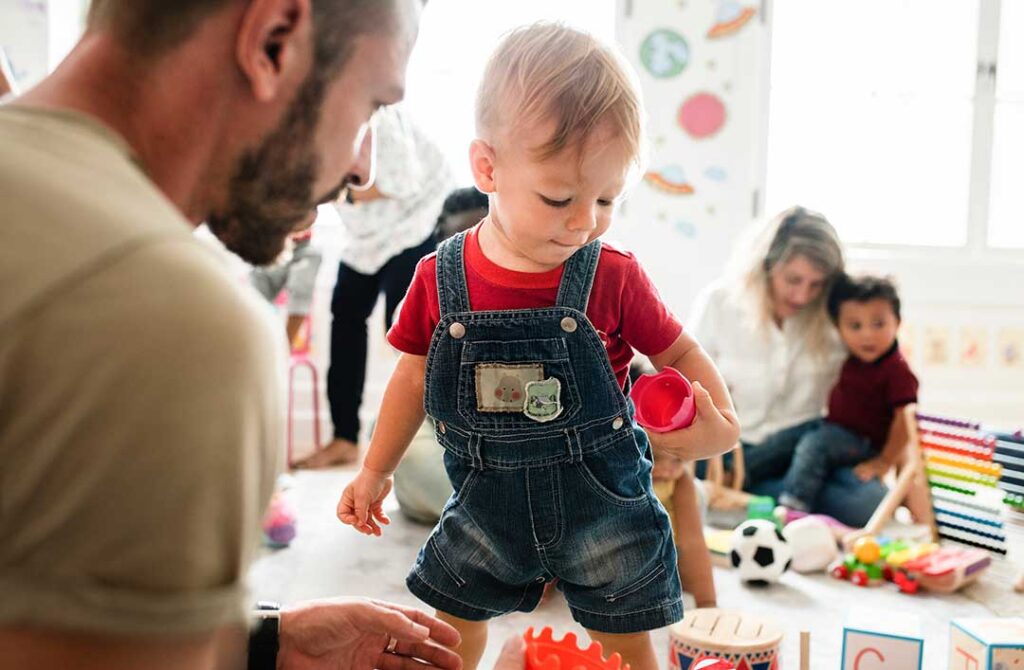
Play is a central way young children learn, communicate, and make sense of their surroundings. In preschool, play-based learning combines child-directed exploration with thoughtful guidance from educators, helping children build academic, social, emotional, physical, and language skills through meaningful activities.
For families in Carmel, IN, understanding this approach can make it easier to recognize what quality preschool learning looks like beyond worksheets, memorization, or long periods of sitting still.
What is play-based learning?
Play-based learning uses enjoyable, purposeful activities to support developmental goals. Children may build with blocks, create pretend scenarios, sort objects, paint, investigate water and sand, or play movement games. Each activity gives them opportunities to practice skills while remaining actively involved.
Play-based learning is not the same as leaving children without direction. Educators typically prepare materials, establish safe boundaries, observe children’s interests, and ask questions that extend thinking. A child building a bridge, for example, may be encouraged to compare lengths, test stability, describe the design, or work with another child.
The play may look simple, but it can involve planning, problem-solving, language development, early mathematics, and self-regulation at the same time.
How does play support early academic skills?
Play gives preschool children a practical reason to use early reading, writing, mathematics, science, and reasoning skills. These abilities are easier to understand when connected to real actions and familiar situations.
Examples include:
- Counting toy animals, arranging objects by size, or dividing materials among several children supports early mathematics.
- Recognizing labels, listening to stories, dictating a message, or pretending to run a store builds language and literacy skills.
- Mixing colors, observing shadows, testing which objects float, or examining leaves encourages scientific thinking.
- Building structures, completing puzzles, and changing a plan after a collapse develop reasoning and spatial awareness.
- Drawing maps, making signs, or creating a story sequence helps children organize ideas and communicate meaning.
Play does not replace intentional teaching. Instead, it gives children repeated opportunities to apply new concepts in ways they can understand and remember.
Why is play important for social and emotional development?
Preschoolers are still learning how to share attention, handle disappointment, express needs, and cooperate with others. Play creates regular situations in which these skills can be practiced.
During group or pretend play, children may need to decide who takes a particular role, wait for materials, explain a rule, or respond when a peer changes the storyline. These experiences help children develop:
- Turn-taking and cooperation
- Verbal conflict resolution
- Empathy and perspective-taking
- Confidence in expressing ideas
- Flexibility when plans change
- Persistence after mistakes
An educator can support this learning by helping children name emotions, model respectful language, and guide them toward solutions rather than immediately solving every disagreement. A conflict over a toy can become an opportunity to practice phrases such as “Can I use it when you’re finished?” or “Let’s find another way to play.”
Does play-based learning help children prepare for kindergarten?
Yes. Well-designed play-based learning can support many abilities children need for a successful transition to kindergarten. These include following directions, listening to others, working independently for short periods, managing belongings, using classroom materials safely, and participating in group routines.
Children also benefit from practicing how to approach unfamiliar tasks. In a play-based setting, they may try several solutions, make changes, and learn that mistakes are part of the process. This can build the persistence and confidence needed for later academic work.
Kindergarten readiness is not limited to knowing letters and numbers. A child who can communicate, regulate emotions, ask for help, attend to a task, and cooperate with classmates has developed important foundations for school.
How do educators make play purposeful?
Educators make play purposeful through planning and observation. They consider children’s developmental levels, interests, and current skills when choosing materials and designing the learning environment.
A classroom might include areas for:
- Pretend play and dramatic expression
- Blocks and construction
- Books and storytelling
- Art and sensory exploration
- Puzzles and manipulatives
- Writing and drawing
- Music, rhythm, and movement
Educators observe how children use these areas and adjust the experience as needed. If children are interested in building homes, an educator might add measuring tools, picture books about houses, clipboards, or signs. If children are exploring a pretend restaurant, menus, order pads, play money, and writing materials can encourage richer language and early mathematics.
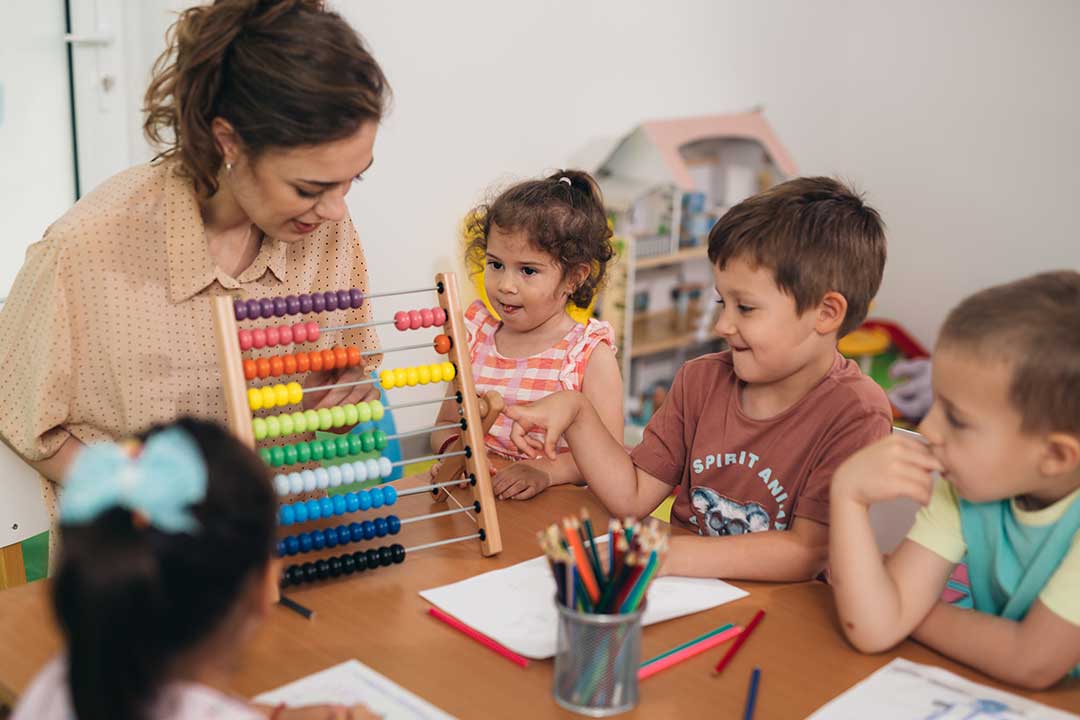
The adult’s role is often to watch carefully, ask open-ended questions, introduce vocabulary, and provide just enough support to help children continue thinking.
Is free play the same as play-based learning?
Not exactly. Free play usually gives children broad choice over what to do and how to do it. Play-based learning may include free play, but it also includes guided experiences connected to specific developmental goals.
Both types of play have value. Free play can strengthen independence, creativity, and decision-making. Guided play adds an educator’s intentional support without removing the child’s active role.
For example, children might freely build with blocks. An educator can extend the experience by asking, “How could you make the tower taller without making it fall?” The child remains in control of the investigation, while the question encourages prediction, testing, and problem-solving.
What does play-based learning look like at home?
Families can support this approach without purchasing special materials or creating a formal classroom. Everyday objects often provide rich opportunities for learning.
At home, children might:
- Sort socks, utensils, buttons, or toy vehicles by color, size, or function.
- Help prepare food by counting, measuring, comparing, and following steps.
- Build with boxes, cushions, recycled containers, or household blocks.
- Act out familiar routines such as visiting a doctor, traveling, shopping, or caring for a stuffed animal.
- Draw pictures, make signs, tell stories, or create books with adult help.
- Explore seasonal changes during walks, such as puddles, fallen leaves, ice, wind, or changing daylight.
For households managing changing weather and seasonal routines, indoor construction, dramatic play, art, and movement games can provide valuable alternatives when outdoor time is limited. The goal is not to turn every activity into a lesson. Children learn best when adults allow time for exploration and follow their interests.
What should families look for in a play-based preschool?
A strong play-based preschool should be able to explain how play connects to developmental goals. Families may look for evidence that children have access to varied materials, meaningful outdoor or movement experiences, books, creative activities, and opportunities to interact with peers.
Useful questions include:
- How are children’s interests incorporated into classroom planning?
- How do educators support children during social conflicts?
- What kinds of early literacy and math skills are practiced through play?
- How is progress observed and communicated to families?
- Are activities adapted for different developmental levels?
- Is there a balance between child choice, routines, group experiences, and educator guidance?
A classroom does not need to be quiet or perfectly orderly to be effective. Productive learning may involve conversation, movement, experimentation, and materials being used in unexpected ways. The key question is whether children are engaged, supported, safe, and gaining skills through their experiences.
Play-based learning gives preschool children room to think, communicate, experiment, and develop relationships while building the foundations for later schooling. Its value comes from the combination of active exploration and intentional adult support—not from play alone, and not from academic instruction alone.