

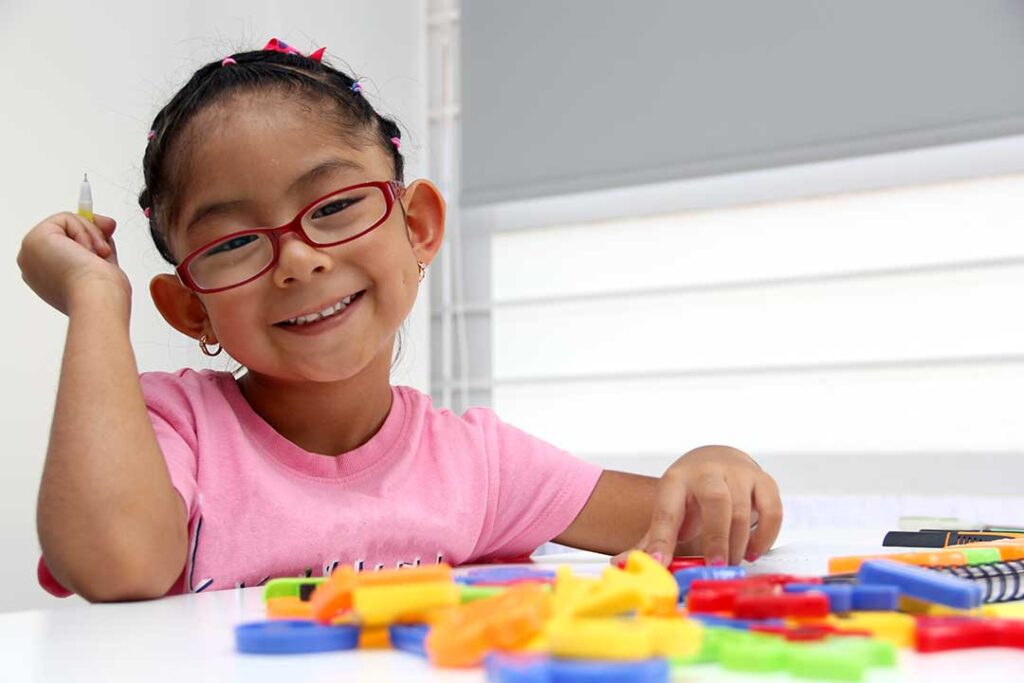
Young children learn social-emotional skills through everyday relationships, routines, play, and guided practice. In Carmel, IN, families and childcare educators can support this development by helping children identify feelings, communicate needs, manage frustration, form friendships, and recover from ordinary disappointments.
Social-emotional growth does not mean expecting children to remain calm all the time. It means giving them repeated opportunities to understand emotions, practice appropriate behavior, and experience dependable support from adults.
What does social-emotional development include?
Social-emotional development is a child’s growing ability to understand feelings, interact with others, make choices, and respond to challenges. These skills develop gradually and vary by age, temperament, language ability, and experience.
Common areas include:
- Recognizing emotions in oneself and others
- Expressing needs with words, gestures, or other communication
- Waiting, taking turns, and following simple group expectations
- Building relationships with trusted adults and peers
- Managing strong feelings with support
- Showing empathy and beginning to understand another person’s perspective
- Solving simple social problems
A preschooler may still cry when a block tower falls or become upset when another child takes a toy. Those reactions are not signs of failure. They are opportunities to practice emotional regulation and problem-solving.
How can adults help children name their feelings?
Children often behave before they have the language to explain what is happening. Adults can make emotions easier to understand by using simple, specific words during real situations.
Instead of saying, “You are being difficult,” an adult might say, “You look frustrated because the puzzle piece will not fit.” This connects the child’s physical experience and behavior with an emotion word.
Useful approaches include:
- Naming the adult’s own feelings appropriately: “I feel concerned because the water spilled.”
- Offering a small choice of emotion words: “Are you angry, worried, or disappointed?”
- Pointing out facial expressions and body cues without assuming too much
- Reading stories and discussing how characters may feel
- Using pictures, emotion cards, or a simple feelings chart
- Accepting the feeling while setting limits on unsafe behavior
A child can be angry and still be expected not to hit. A helpful response might be, “You are angry. I will not let you hit. You may stomp your feet, squeeze a pillow, or tell me what happened.”
What helps children manage frustration?
Young children usually cannot regulate intense emotions through reasoning alone. They need calm adults, predictable routines, and repeated practice with coping strategies.
During a difficult moment, adults should use fewer words, a steady voice, and clear boundaries. Long explanations may be hard for a distressed child to process. First help the child become safe and calm; discuss the event more fully afterward.
Simple regulation strategies may include:
- Taking slow breaths together
- Moving to a quieter space
- Drinking water
- Holding a comfort object
- Counting slowly
- Pushing hands together or squeezing play dough
- Taking a brief movement break
- Sitting near a trusted adult
The goal is not to force immediate calm. A child may need time to cry while an adult remains nearby. This teaches that strong feelings can be managed safely and that support remains available during distress.
How does play support social-emotional learning?
Play gives children a low-risk setting to rehearse social situations. Through pretend play, construction, games, art, and movement, children explore cooperation, leadership, disappointment, flexibility, and repair.
For example, a pretend restaurant may help children practice taking orders and waiting. Building with blocks can create opportunities to negotiate space and materials. A simple board game can teach turn-taking, losing gracefully, and trying again.
Adults can support play without controlling every interaction by observing first and offering brief guidance:
- “You both want the red truck. What could you do?”
- “The tower fell. What is your plan now?”
- “She said stop. What can you do with your hands?”
- “You found a way to include another player.”
Children benefit from adults who coach problem-solving rather than solving every conflict immediately. If safety is not at risk, a short pause can give children time to attempt a solution.
How can childcare settings encourage positive peer relationships?
Consistent classroom routines make social expectations easier for young children to understand. Children are more likely to cooperate when they know what will happen next and what adults expect.
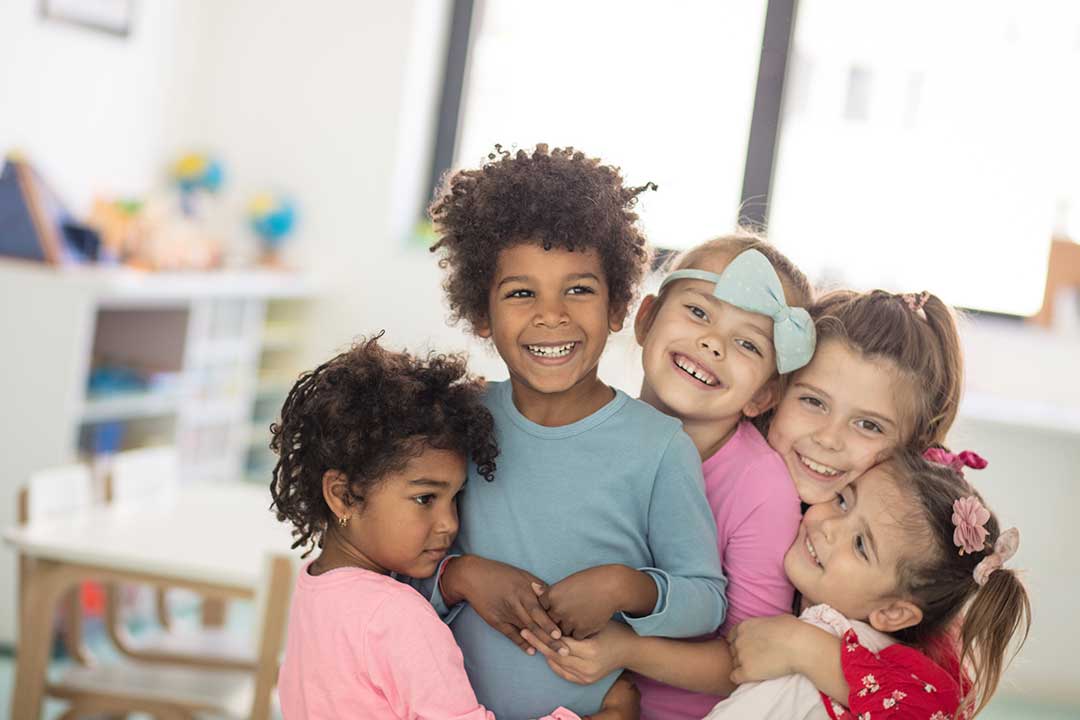
Helpful practices include:
- Greeting each child by name
- Demonstrating how to enter play
- Providing duplicate or varied materials when possible
- Teaching specific phrases such as “Can I have a turn?” and “Please stop”
- Praising helpful actions rather than labeling children as “good”
- Preparing children for transitions with warnings and visual cues
- Creating quiet areas for children who need a break from noise or activity
Adults should pay attention to repeated exclusion, intimidation, or physical aggression. Occasional conflict is part of learning, but patterns that affect a child’s safety or participation require thoughtful observation and communication with the adults responsible for the setting.
What should families do at home?
Children benefit when home and childcare expectations are reasonably consistent. Families do not need identical routines, but shared language can help children transfer skills between settings.
At home, adults can build social-emotional learning into ordinary activities:
- Invite children to help with simple household tasks.
- Give advance notice before leaving the playground or beginning bedtime.
- Offer two acceptable choices instead of unlimited options.
- Talk about feelings after a child is calm.
- Practice greetings, asking for help, and repairing mistakes.
- Protect regular sleep, meals, outdoor activity, and quiet time.
- Limit rushed transitions when schedules allow.
Carmel’s seasonal changes may affect children’s routines. Cold weather, heat, rain, or shorter outdoor periods can increase restlessness when children have fewer opportunities for active play. Indoor movement games, hallway walks where appropriate, dancing, stretching, and sensory activities can help provide healthy ways to release energy.
How should adults respond to challenging behavior?
Challenging behavior is communication, but that does not mean every behavior should be permitted. Adults can look for the need or skill behind the behavior while maintaining clear limits.
Consider whether the child is tired, hungry, overwhelmed by noise, unable to express a request, struggling with a transition, or seeking connection. Then respond to both the underlying need and the behavior.
A useful sequence is:
1. Keep everyone safe.
2. State the limit briefly.
3. Name the feeling or need if possible.
4. Offer an acceptable alternative.
5. Reconnect after the child is calmer.
6. Practice the skill later.
For instance: “You wanted the toy, and you grabbed it. Grabbing hurts. Next time, say ‘Can I use it when you are finished?’ Let’s practice.”
Shaming, threats, and forced apologies may stop behavior temporarily but do not necessarily teach the missing skill. A sincere repair—returning an item, checking on someone, helping rebuild, or trying a respectful phrase—usually provides more useful learning.
When might additional guidance be useful?
Children develop at different rates, but persistent or intense concerns deserve attention. Families may wish to discuss patterns with the child’s pediatric provider or childcare educator when a child regularly cannot participate in ordinary activities, loses previously developed communication skills, remains extremely distressed for long periods, or shows frequent aggression that does not improve with consistent support.
A single difficult week is not enough to define a child’s development. Look for patterns across time and settings, and consider changes such as family stress, illness, sleep disruption, or a recent transition. Early guidance can help adults understand what a child is communicating and identify practical supports.
Social-emotional growth is built through thousands of ordinary interactions: a calm goodbye, a supported disagreement, a chance to try again, and an adult who sets limits without withdrawing connection. Those repeated experiences help children become more capable of understanding themselves and participating safely with others.